🔹 Oil is pricing a deal that's six weeks away
Stocks set fresh records as Hegseth confirms the Iran ceasefire and oil retreats nearly 4%.
| ◆ |
A Peace Trade With No Date On It
Crude gave back part of its war premium. The deal it's pricing comes after November.
The Close
The Nasdaq Composite closed at a record for a second day running. The S&P 500 finished flat and the Dow slipped 185 points, dragged down by bank shares, with JPMorgan off 3.4% and Bank of America down 3%. Brent crude settled at $99.25, down 1.1%, after dipping below $98 during the session.
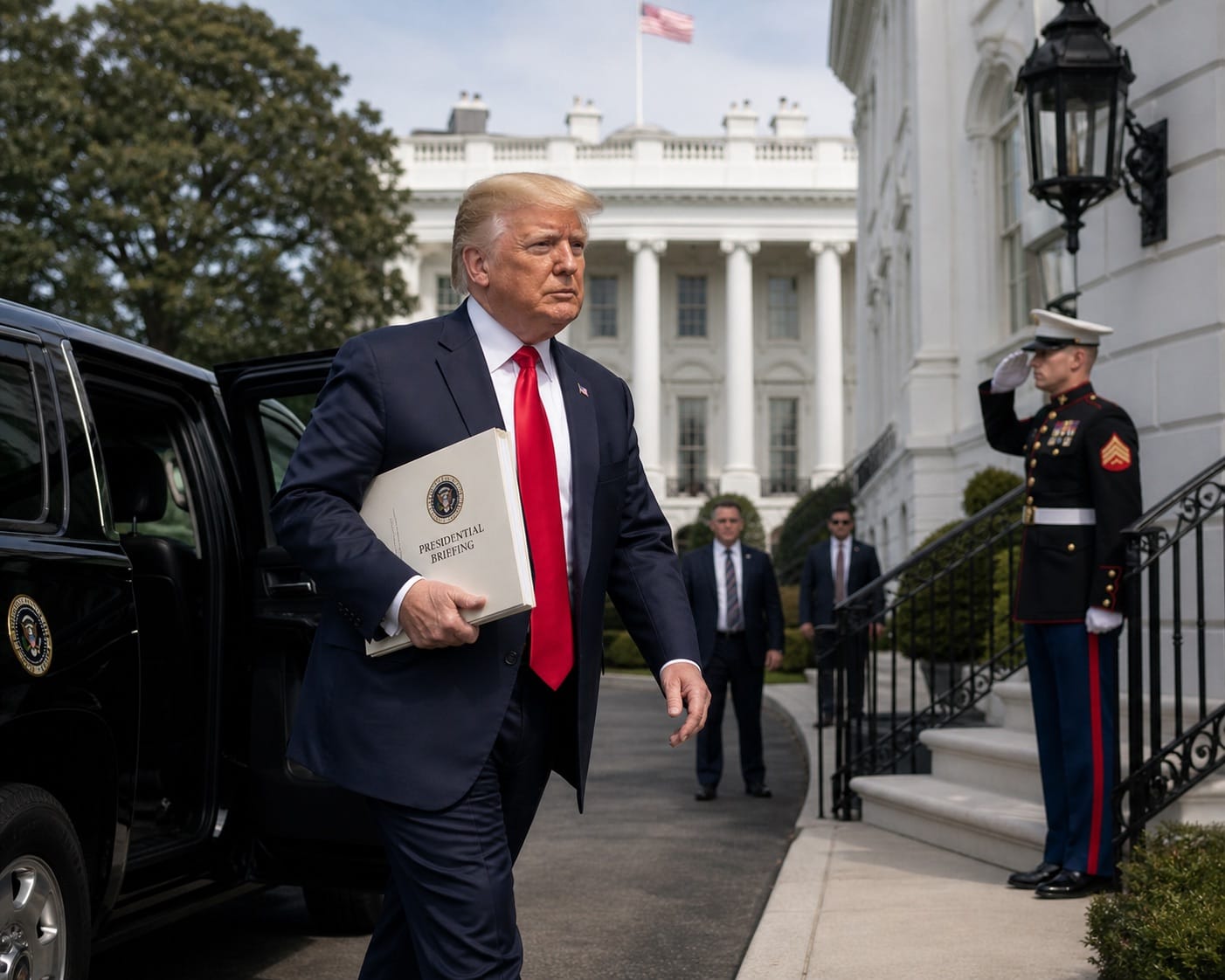
The oil move is the one worth sitting with. Crude has been falling for days on signs of diplomacy between Washington and Tehran. Then, at the United Nations, President Trump said he expects a deal with Iran only after November's midterm elections. The market and the calendar are telling different stories.
One Big Thing
An oil price has two layers. The first is the cost of pulling a barrel out of the ground and delivering it, set by ordinary supply and demand. The second is a fear premium: what buyers will pay for protection against supply being cut off. That second layer moves on headlines, sometimes by dollars in a morning.
Right now the arithmetic is unusually easy to see. Before the war with Iran, Brent traded around $72. Last week it touched nearly $110. Tuesday it settled at $99.25. Call it $38 of fear added at the peak, roughly $11 of it taken back out in a week, and something like $27 still sitting inside every barrel.
What removed that $11 was diplomacy. An Iranian delegation came to New York, American envoys met Iranian officials for three hours on the sidelines, and Trump said afterward that they had a very good meeting.
The market didn't price a deal. It priced better odds of one, and odds get repriced in an afternoon.
Which is what makes Tuesday's speech worth reading closely. Trump told the General Assembly, "I believe we'll make a deal, right after the election." He described the alternative in the same breath as annihilating the Islamic Republic. Traders sold the premium on the direction of things rather than the date, because that is what markets do. They pay today for what looks probable later.
The risk lives in the same sentence. If the deal is a November event at the earliest, six more weeks of headlines stand between here and there.
| Before the war | ~$72 |
| Last week's peak | ~$110 |
| Tuesday's settle | $99.25 |
The distance between the top bar and the bottom one is the relief traders have priced in. The distance between the bottom bar and the first is what the war still costs, about $27 a barrel, and it shows up in fuel, freight and the inflation figures the Fed watches.
Source: Associated Press market report, Sept. 22, 2026. Pre-war and peak levels as reported, rounded.
The Deeper Read
There's a reason to hold this rally loosely. ABC News counted that since the war began nearly seven months ago, the president has pulled back from major threats against Iran on at least eight separate occasions. Each threat and each retreat has moved the price of crude, and nothing structural changed on any of those days.
That is a market taking its direction from one person's statements rather than from barrels. And the barrels have not come back. The Energy Information Administration expects most of the shut-in Middle East production to be restored only in the second half of 2027.
So even a signed agreement in November wouldn't refill the world's tanks by Christmas. Stripping out a fear premium takes days. Rebuilding physical supply takes years. The space between those two clocks is where the remaining $27 lives.
It's also worth keeping the baseline in view. At $99, crude is still roughly 38% above where it sat before the fighting started. That is the number that feeds inflation, and therefore the number the Fed is still responding to.
What This Means For You
Check the baseline behind every "oil is falling" headline. Those stories measure against last week. Your heating bill and your grocery receipt measure against last year, and by that yardstick energy is still dramatically more expensive. The relief is real for traders and thin so far for households, which matters most for anyone drawing a fixed income against costs that keep climbing.
Resist rebuilding a plan around a political timetable. A deal predicted for "right after the election" is a forecast from an interested party, not a date on a calendar. Portfolios built on predicted headlines tend to get rearranged by the next one.
If you want a better signal than speeches, watch whether the barrels actually move. Shipping volumes through the Gulf and the level of Saudi exports will tell you more about next year's fuel costs than anything said from a podium this week.
The Long Game
Markets price probabilities every second of every day. Politics arrives in lumps, on its own schedule, and usually late. Most of the noise in a year comes from the gap between those two rhythms.
Six weeks is an eternity in a futures pit and nothing at all in a retirement. A war premium will come out of oil eventually, in one move or in fifty, and the portfolio built to survive either will look much the same on the other side. That's the whole argument for reading days like this with interest and treating them as information rather than instruction.
| ◆ |
— Anthony