🔹 Records, Ratios, and a Ceasefire That (Mostly) Holds
Stocks set fresh records as Hegseth confirms the Iran ceasefire and oil retreats nearly 4%.
Good afternoon,
It was one of those days where the market quietly did something historic. The S&P 500 and Nasdaq closed at fresh all-time highs, oil retreated almost 4%, and a fragile ceasefire in the Strait of Hormuz held just long enough for traders to exhale. Earnings continued to roll in strong, with AMD's after-hours pop reminding everyone that the AI infrastructure trade still has legs. Bonds, however, are telling a different story, and gold is sitting at a level that deserves a closer look. For retirement-focused investors, today is less about chasing the rally and more about understanding what this mix of records, yields, and geopolitics means for the years ahead.

The Pulse

The 10-year Treasury yield remained stubbornly elevated near 4.44%, and the 30-year topped 5%, a quiet warning that the bond market is not buying into the calm.
Markets
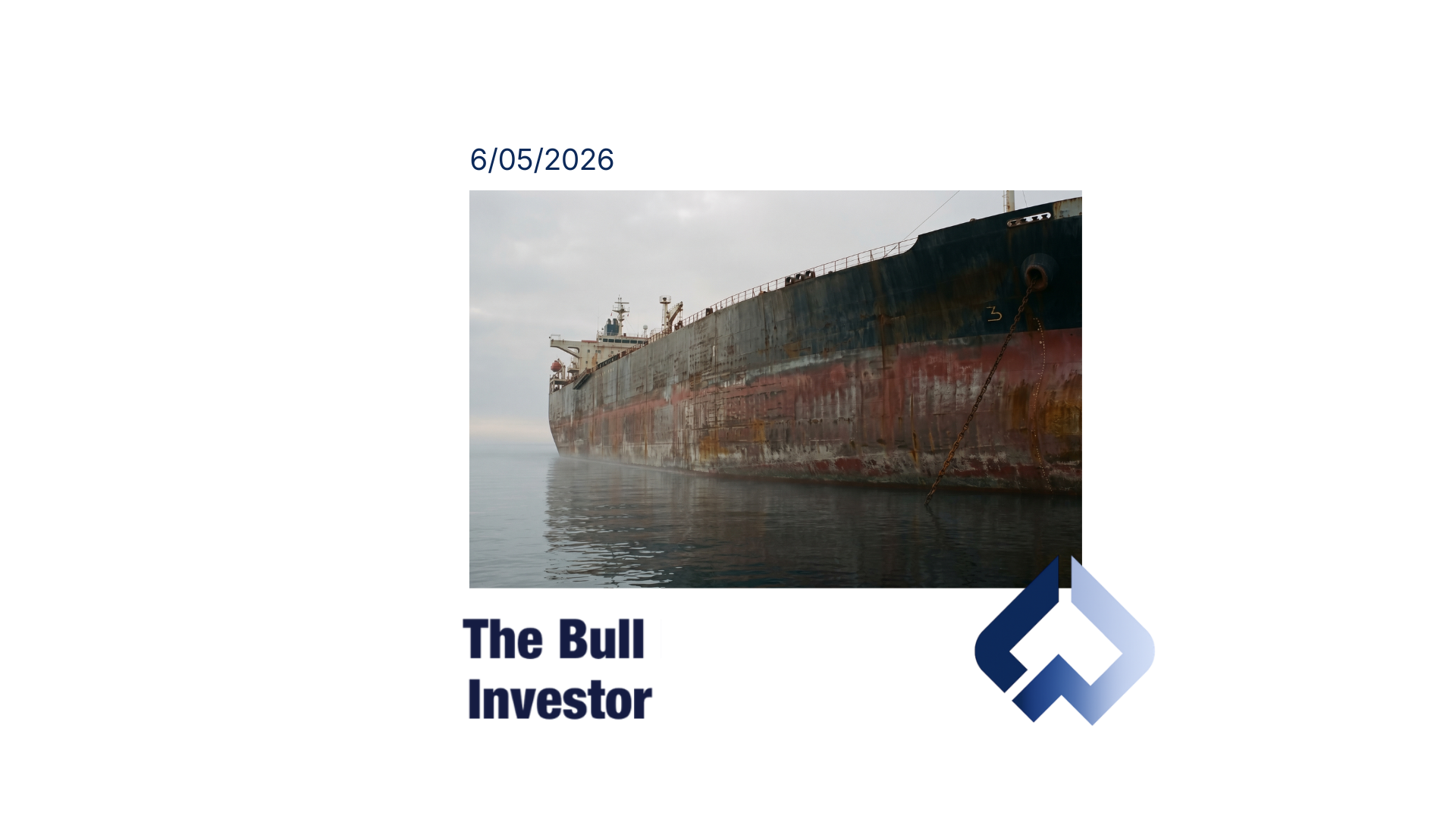
- Brent crude fell 4% to $109.87 and WTI dropped to $102.27 after the U.S. successfully escorted two commercial ships through the Strait of Hormuz.
- The 10-year Treasury yield hovered near 4.44% and the 30-year topped 5%, with futures markets now pricing essentially no Fed cuts for the rest of 2026.
- The U.S. Treasury said it now expects to borrow $189 billion in Q2, $79 billion above its February estimate, adding fresh supply pressure to the long end.
The story today is the divergence. Equities are celebrating ceasefire optimism and strong earnings, while bonds are pricing in higher inflation and heavier issuance. That gap rarely lasts. For long-term investors, the question is which side eventually adjusts.
Earnings
- The headline name was AMD, which jumped roughly 15% after-hours on a Q2 revenue guide that comfortably topped consensus. Data-center growth led the quarter, reinforcing that AI infrastructure spending is still in its early innings.
- Palantir posted its fastest revenue growth since IPO and raised full-year guidance, but shares slipped about 3% on stretched valuation concerns.
- Pfizer beat estimates and reaffirmed its full-year outlook as newer drugs offset declining COVID franchise sales.
- HSBC missed Q1 expectations, dragged by sharply higher expected credit losses, and London shares fell more than 5%.
With roughly 85% of S&P 500 reporters beating EPS this season, profits remain the load-bearing wall holding this rally up. HSBC's credit miss is a reminder that not every wall is equally sturdy.

This week's lineup:
- Today: Walt Disney, Uber, Kraft Heinz
- Thursday: McDonald's, Coinbase
Gold & Silver Moves
Gold settled at $4,582.84 per ounce, up 1.18% on the day. It was a recovery session after Monday's slide, when gold opened at its lowest level since late March on the back of the Hormuz attacks.
Gold's behavior has been counterintuitive lately. With war in the Middle East, sticky inflation, and a softer dollar, you might expect a clean rally. Instead, gold is down roughly 13–15% since the conflict began in late February. The reason is the bond market. Higher real yields raise the opportunity cost of holding a non-yielding asset, and that pressure has capped gold even as geopolitical risk runs hot.
Yet physical demand tells a different story. The World Gold Council reported Q1 2026 demand of 1,231 tonnes, valued at a record $193 billion, up 74% in dollar terms year-over-year. Investment bars are now decisively outpacing jewelry, a structural shift worth noting.
Silver closed at $74.52 per ounce, up 1.90% on the day. That outperformance versus gold on a percentage basis is meaningful. Silver is down roughly 22% from its pre-war peak, more than gold, but its recovery sessions have been sharper.
Silver's dual identity, half monetary metal and half industrial input, is on full display. Solar demand and electronics manufacturing continue to underpin the floor, while inflation and rate uncertainty drive the volatility on top.

The Gold / Silver ratio sits at roughly 61.5, calculated as $4,582.84 divided by $74.52. That is meaningfully below the 20-year average of 75–80, and a long way from the 2020 pandemic spike near 125. Over the last twelve months, silver has more than doubled while gold has risen about 34%, compressing the ratio steadily.
Historically, a sub-65 ratio suggests silver is fully valued relative to gold. Mean-reversion traders often interpret that as a signal to rotate from silver back into gold. Momentum traders read it differently, viewing the compression as confirmation that physical demand has broadened beyond pure safe-haven flows into industrial channels.
For retirement-minded investors, the ratio carries a quieter message. When silver leads gold for this long, it usually reflects a market that is pricing in both inflation and growth, not pure fear. That is a more constructive backdrop than the headlines suggest, but it also means the easy gains in silver may be behind us.
Precious metals are doing their job as a purchasing-power hedge, but the compressed ratio suggests gold may now offer the better risk-adjusted exposure for portfolios built around long-term resilience.
The Deal Room
M&A / Investments
- GameStop offered $125 per share, or about $56 billion, for eBay in a 50/50 cash-and-stock proposal backed by a $20 billion letter from TD Bank. GameStop shares fell 10% on dilution concerns.
- Sun Pharma agreed to acquire Organon for $11.75 billion, one of the largest cross-border pharma deals of the year.
- Apollo funds will buy Forvia's auto interiors business for $2.1 billion, continuing PE's appetite for auto-supply carve-outs.
IPO / Listings
- One ticker tied to Musk could go parabolic in the coming weeks… partner
- Churchill Capital Corp XII closed an upsized $414 million IPO on April 29, signaling that SPAC issuance retains a pulse in the current market.
On the subject of IPOs, the biggest one of the year may already be moving behind the scenes.
Bankruptcy / Distress
- Spirit Airlines received court approval to liquidate after rising fuel costs added roughly $100 million to expenses in March-April alone, putting 17,000 workers out of jobs.
Retirement Lens
Days like today are easy to misread. Records feel like progress, but the bond market and gold's behavior suggest the foundation underneath is shifting. For retirement portfolios, the lesson is not to chase the rally or flee from it, but to check whether your mix still reflects what you need: income that holds up against $4.48 gasoline, principal that survives a 5% long bond, and equity exposure broad enough not to depend on any single AI chip. Resilience beats prediction, especially in markets that change their mind every Tuesday.

Headline Hunt
- JOLTS showed March job openings at 6.87 million, with hires surging by 655,000.
- The Financial Stability Board called for tighter scrutiny of the $2 trillion private credit market, citing opaque valuation and bank exposure.
- National average gasoline hit $4.483 per gallon, the highest since July 2022, up 38 cents in a month.
- Micron Technology rose 5% on reports its high-bandwidth memory products are sold out through 2026.
- PayPal fell 10% after issuing a downbeat current-quarter outlook despite an earnings beat.
- Shopify dropped 7% on weaker-than-expected Q1 earnings.
- Tyson Foods beat estimates and raised its full-year operating income outlook.
- Supermicro soared 18% after-hours on AI server demand.
- Nvidia said its market share in China has fallen to zero, with no expected revenue from the region in Q1.
- Berkshire Hathaway's cash pile expanded to a record $397.4 billion in Q1 under new CEO Greg Abel.
- GE Vernova is partnering with nuclear startup Blue Energy to power a Texas data center using small modular reactors.