🔹 CEASEFIRE REJECTED. MARKETS BRACE FOR WHAT COMES NEXT.
Futures fall Thursday as the Pentagon reportedly prepares options for a broader campaign.
Good afternoon,
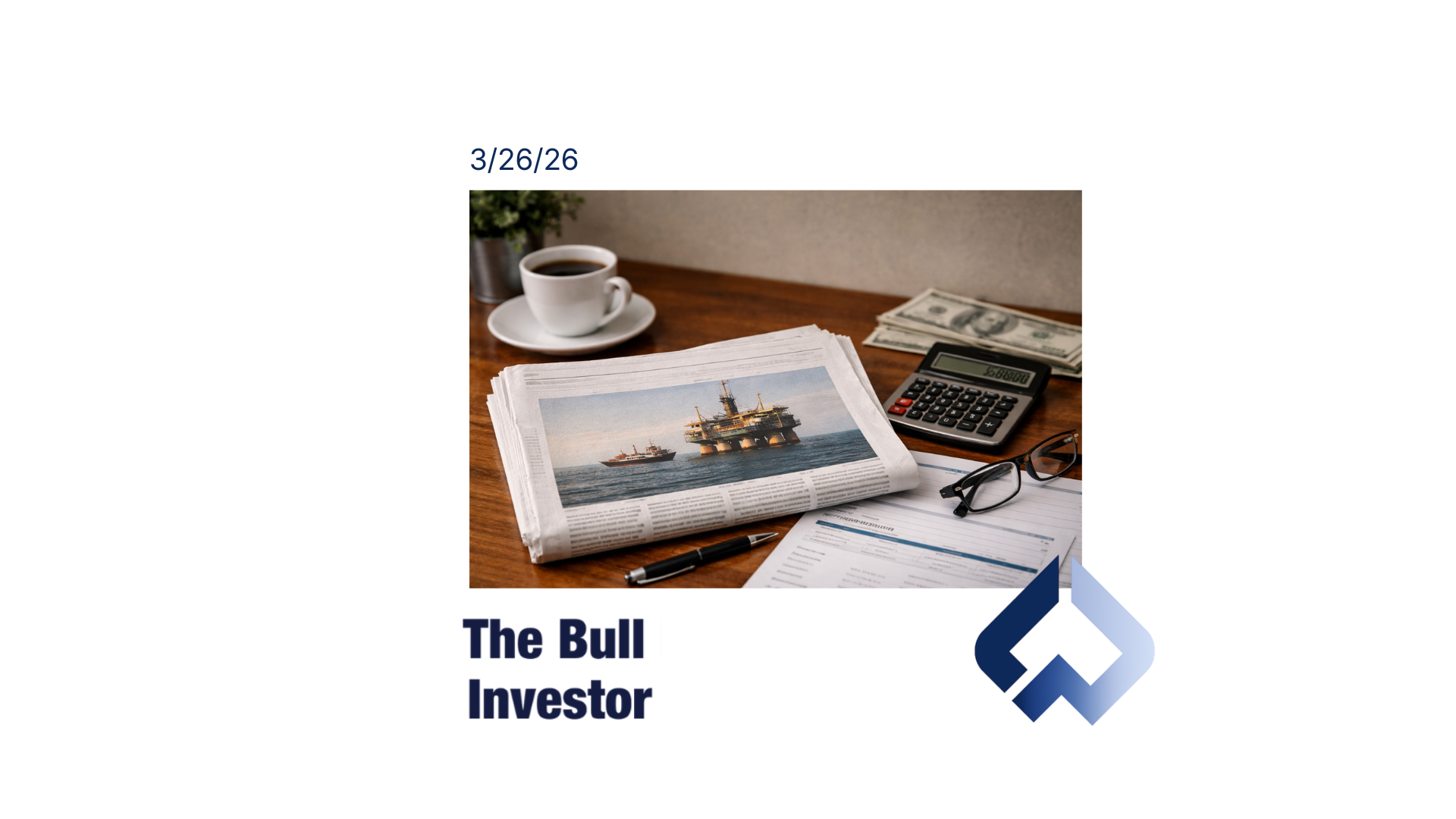
Wednesday's optimism lasted about 18 hours. The S&P 500 rose half a percent on ceasefire hopes, oil dipped below $97, and then Iran formally rejected the US proposal, pushing Brent back above $106 Thursday morning. For anyone drawing income from a portfolio, or planning to over the coming decades, the persistent question is: when does energy-driven inflation start to have long-term consequences for fixed-income streams?
Getting started.

The Pulse

Markets
- The S&P 500 rose 0.54% Wednesday to 6,591.90 and the Dow gained 305 points as oil prices briefly dropped below $97 on reports Iran received a US 15-point peace proposal.
- Dow futures dropped ~300 points Thursday as Brent jumped 3.8% to $106 and WTI climbed 3.5% to $93.45 after Iran rejected the plan and issued its own counterproposal demanding control of the Strait of Hormuz.
- Semiconductor stocks led Wednesday's gains. AMD and Intel each jumped over 7% on reports of CPU price hikes amid a supply crunch. Arm surged 16% after unveiling its first in-house AI chip.
- US import prices rose 1.3% in February, the largest monthly gain in nearly four years, driven by nonfuel goods, signaling inflationary pressure was building before the March oil spike.
Wednesday and Thursday together illustrate the recent pattern: one day's diplomatic hope becomes the next day's reversal. The five-day pause on strikes reportedly expires within 48 hours.
Earnings
- Paychex (PAYX) beat on both lines, posting fiscal Q3 adjusted EPS of $1.71 (vs. $1.67 expected) on revenue of $1.81 billion (vs. $1.78 billion). Revenue grew 20% year-over-year. Shares rose ~5%.
- Chewy (CHWY) beat on EBITDA and raised full-year guidance above consensus. Shares jumped 13%.
- KB Home (KBH) cut its full-year outlook, now expecting 10,000–11,500 home deliveries (from 11,000–12,500), citing depressed consumer confidence and elevated mortgage rates.
Paychex and Chewy suggest consumer and small-business spending continues. KB Home's warning is a reminder that rate-sensitive sectors are feeling the squeeze.

- This week's lineup:
- Friday: Carnival
Gold & Silver Moves
Gold:
Gold traded in a volatile range. On Wednesday, spot prices rallied roughly 2.7% to approximately $4,520 per ounce as the dollar weakened on ceasefire hopes. By Thursday morning, prices had pulled back to around $4,420 as Iran's rejection reignited oil and renewed dollar strength.
The mechanism is worth understanding. Rising oil pushes up inflation expectations, making rate cuts less likely, which strengthens the dollar and pressures non-yielding assets like gold. This dynamic drove gold's eight-session losing streak earlier in March, when prices touched a 2026 low near $4,100. Analysts at BNP Paribas have noted that similar sell-offs in 2008, 2020, and 2022 were each followed by recoveries, though whether that pattern holds depends on how the oil situation resolves.
Silver:
Silver traded near $71–$74 per ounce, outperforming gold on a percentage basis. Silver's dual identity as both a monetary and industrial metal gives it a different floor. Demand from electronics and renewable energy has kept silver from falling as steeply as gold, and it has tended to bounce harder when risk sentiment improves.

The Gold / Silver ratio sits at approximately 61–63, compressed from around 63 earlier in March. This is below the 50-year average of roughly 67.
When the ratio falls, it has often reflected improving risk appetite and stronger industrial confidence. The current reading may suggest markets are pricing in an inflationary but not recessionary environment. Silver's industrial demand appears firm, supported by electronics and clean energy, while gold's monetary premium has cooled alongside fading rate-cut expectations. If the ratio compresses further, it could signal silver catching a bid from industrial buyers and inflation-focused investors alike. If it widens, safe-haven demand may be reasserting itself.
Worth noting: The short-term picture for both metals remains tied to oil and the dollar. For anyone considering how precious metals relate to longer-term questions about inflation protection or currency diversification, separating this week's price action from the structural dynamics that play out over years is a useful exercise, and one worth discussing with a qualified advisor.
The Deal Room
- Merck agreed to acquire Terns Pharmaceuticals for $6.7 billion ($53/share), gaining a leukemia treatment ahead of Keytruda's 2028 patent expiration. (BBG)
- Brookfield and La Caisse agreed to take Canadian renewables producer Boralex private for $6.5 billion. (CNBC)
- KKR purchased bakery chain Nothing Bundt Cakes from Roark Capital for $2 billion. (CNBC)
- JetBlue shares jumped 18% after reports the airline engaged advisors to explore a merger with a competitor. (CNBC)
IPO / Listings
- SK Hynix, a major Nvidia supplier, filed for a US ADR listing that could raise up to $14 billion, potentially one of the largest tech offerings in recent years. (CNBC)
Retirement Lens
The chain continues. Oil shocks feed inflation. Inflation keeps rates elevated. Elevated rates pressure bonds and rate-sensitive sectors like housing. And all of it erodes the purchasing power of fixed-income streams.
That chain touches several risks by name. Sequence-of-returns risk: a drawdown at the wrong time can reduce portfolio income for decades. Longevity risk: a 30-year retirement means savings need to outpace inflation for years most of us have not yet planned for. Tax risk: shifting yields and policy can change the after-tax value of income in ways that only become clear at filing time.
The forces moving markets, oil, yields, the dollar, are the same forces that determine what a dollar of savings will buy in 2036 or 2046. The more clearly we see those connections, the better the questions we bring to the people who advise us.

Headline Hunt
- Goldman Sachs raised its 12-month US recession probability to 30% from 25%, citing oil-driven inflation and tighter financial conditions.
- Corcept Therapeutics surged roughly 40% after receiving FDA approval for a cancer drug.
- Meta cut approximately 700 jobs across Reality Labs, sales, and recruiting teams.
- SpaceX may file its IPO prospectus as soon as this week, with projections the offering could raise up to $50 billion.
- Iraq declared force majeure on foreign-operated oilfields and cut production by 80% in southern fields.
- Meta was ordered to pay $375 million in a New Mexico jury verdict over child safety claims.
- The S&P 500 Shiller CAPE ratio exceeded 39, a level not seen since the 2000 dot-com peak.
Recommended Reading
- Borrowing for the $3 Trillion AI Data Center Build-Out: How AI infrastructure spending is reshaping debt markets, with up to $300 billion in hyperscaler bonds expected in 2026. Relevant for understanding AI concentration risk in fixed income.