🔹 Chipmaker Blowout, Hotter Dollar, Fed on Hold
Intel posts its biggest surprise in a decade as rotation quietly shifts under the surface.
Good afternoon,
The last two sessions told two very different stories. Intel delivered the biggest earnings surprise of the year, with the stock clearing a price not seen since the 2000 tech bubble. Underneath that, consumer inflation expectations spiked and defensive sectors quietly took the lead as software names got hit.

The Pulse

Markets
- The S&P 500 and Nasdaq retreated from fresh intraday records as IBM and ServiceNow tumbled on disappointing guidance.
- Defensive sectors led the tape, with utilities, industrials, and staples posting the strongest gains while software and discretionary names sold off.
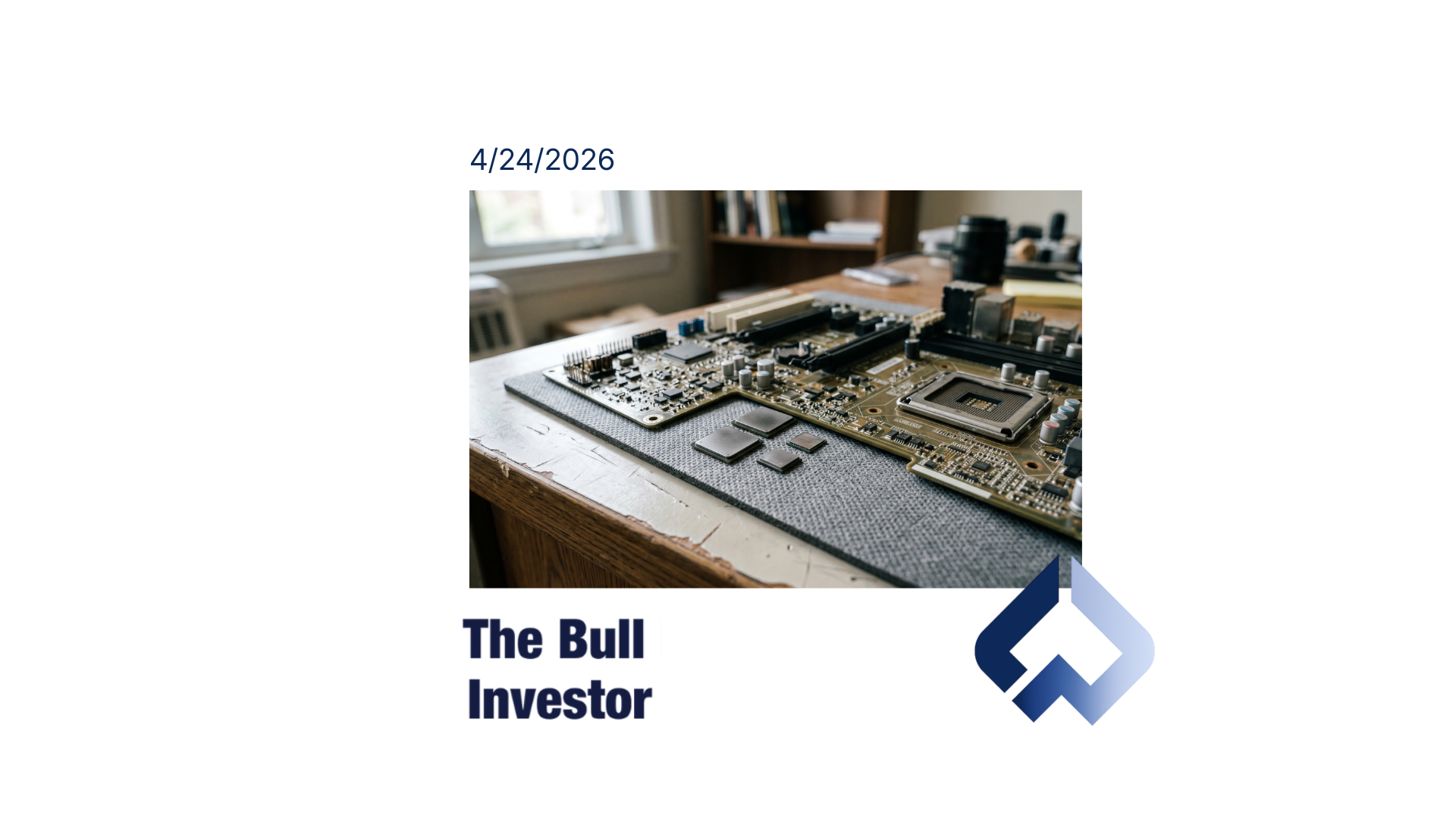
- The semiconductor rally is now the most extended it has been in a quarter century, having added several trillion in market value over roughly three weeks .
- Brent crude pushed above $107 as both the US and Iran continued seizing vessels in the Strait of Hormuz, with the IEA calling this "the largest energy crisis we have ever faced".
Two things under the surface are worth naming. The first is that the semi trade is as crowded as it has been in 25 years, the kind of setup that can reverse quickly even without a clear catalyst. The second is that money moved quietly into utilities and staples on Thursday, the classic signal that some participants are preparing for a less accommodating backdrop.
Earnings
- Intel posted the biggest earnings surprise of the year, roughly 1,350% ahead of the consensus EPS estimate, on revenue that beat expectations by more than a billion dollars. Data Center and AI revenue jumped more than 20%. Second-quarter guidance also cleared the Street. Shares rose 19% in extended trading and pushed through the company's 2000 tech-bubble peak. CEO Lip-Bu Tan told analysts "the CPU is reinserting itself as the indispensable foundation of the AI era".
- American Express delivered card member spending growth of 10%, its highest quarterly rate in three years, with luxury retail spending up sharply; shares still fell on cautious commentary about new investment plans.
- Blackstone reported record assets under management of roughly $1.3 trillion, supported by over $300 billion in data-centre holdings and development pipeline.
- Comcast beat on both lines, helped by the Super Bowl and Winter Olympics, while narrowing broadband subscriber losses for the first time since 2020.

This week's lineup:
- Today: Procter & Gamble
Gold & Silver Moves
Gold is trading at roughly $4,689 per ounce on Friday, down about 0.6% on the day and on track for a 3% weekly loss. The move reflects two steady headwinds. The dollar firmed to a one-week high, and the 10-year Treasury yield climbed back above 4.3%, raising the opportunity cost of holding a non-yielding asset. Even so, gold remains well above where it started 2025, and central banks continue to buy at a steady pace.
A separate conversation has been running in Washington that is worth keeping on the radar. The US Treasury still carries its gold at the statutory price set in 1973, a fraction of the market rate. Revaluing it to fair value is a policy lever that has been discussed openly this year, though nothing has been signed. For long-term holders, it is the kind of structural story worth understanding before, not after, it becomes a headline.
Silver sits near $75.50 per ounce after falling nearly 2% over the past 24 hours. Since the Iran war began in late February, silver has dropped more than gold has in percentage terms. That difference matters. Silver's story is no longer just about a safe-haven bid. It is increasingly about the physical metal that goes into AI chips, EVs, solar panels, and defence electronics, where there is no substitute at scale.

The Gold / Silver ratio
With gold at $4,689 and silver at $75.50, the ratio stands at 62.1. It has held in a tight 60 to 62 range all week despite both metals selling off, meaning the pullback has been roughly proportionate rather than a rotation from one metal into the other. For historical context, the modern average since 1970 is about 60, and the post-2000 average is closer to 70. A year ago the ratio briefly touched 105, when silver was demonstrably cheap against gold. Today's reading of 62 puts the pair essentially at their long-run equilibrium.
What stands out is that both metals declined together as the dollar firmed and real yields rose. That pattern suggests the market is currently treating gold and silver as a single real-asset hedge against inflation rather than differentiating between safe-haven gold and industrial silver. A meaningful move from here would require one of two things: a genuine risk-off shock that rotates money specifically into gold, or a reacceleration in AI and industrial demand that pulls silver ahead. Neither is the base case going into next week's Fed meeting.
The takeaway. Both metals are behaving as the historical record suggests they should in a mixed-signal environment, and for portfolios built to preserve purchasing power, that steadiness is the whole point.
The Deal Room
M&A / Investments
- QXO agreed to acquire insulation leader TopBuild for roughly $17 billion, a deal that makes QXO the second-largest building products distributor in North America.
- Meta announced it will cut roughly 10% of its workforce in May to offset AI spending now running in the tens of billions a year.
- Tesla disclosed a multibillion-dollar AI hardware acquisition in a single sentence buried in its Q1 10-Q, most of it tied to performance milestones; the footnote lands the same week Elon Musk laid out a capex plan now running well into the tens of billions.
- SpaceX now controls the frequencies needed to build a global broadband network. No more relying on terrestrial infrastructure. No more waiting for regulators.A single $17 billion deal could unlock a $10 trillion opportunity if Musk's vision takes off. But the market hasn't caught on yet. Watch urgent presentation to see how this plays out. sponsor
IPO / Listings
- Cerebras Systems publicly filed its S-1, targeting a May Nasdaq listing under the ticker CBRS, with 2025 revenue up sharply year over year.
- Blackstone filed to launch Blackstone Digital Infrastructure Trust, a new public entity that will acquire stabilised, newly constructed data centres.
Retirement Lens
The data point worth sitting with this week is the jump in consumer inflation expectations to the highest reading in a year. Whether that figure turns out to be right or wrong, it is what the Federal Reserve will read on Wednesday. And it is the reason rates are now expected to sit where they are for the rest of 2026.
For portfolios focused on preserving purchasing power, that setup cuts in a few directions. Short-duration bonds and money-market vehicles still produce real income. Real assets, including gold and silver, continue to do what they have historically done. Equity exposure to the AI-infrastructure build is delivering, though the crowding in semiconductor names is a genuine risk to acknowledge. The defensive rotation underway in utilities and staples is not a recession call; it is a reminder that different parts of a diversified portfolio take turns carrying the weight.
Next Wednesday's Fed decision is the event. Everything between now and then is positioning.

Headline Hunt
- Avis Budget collapsed around 50% on Thursday and has unwound most of a hedge-fund-driven short squeeze that pushed shares up roughly 600% since March.
- American Airlines cut its 2026 guidance by more than half, warning it could post a full-year loss on a multibillion-dollar fuel cost surge.
- United Airlines CEO Scott Kirby warned of double-digit ticket price increases industry-wide and cut United's full-year profit outlook by roughly a third.
- Trump announced a three-week extension to the Israel-Lebanon ceasefire after a White House meeting with senior US officials.
- Siemens Energy raised its full-year outlook on AI-driven power equipment demand, becoming Germany's third-largest listed company.
- SAP beat Q1 estimates and shares jumped 7%, a bright spot for enterprise software on a weak day for US peers.