🔹 Markets Shrug Off a Blockade
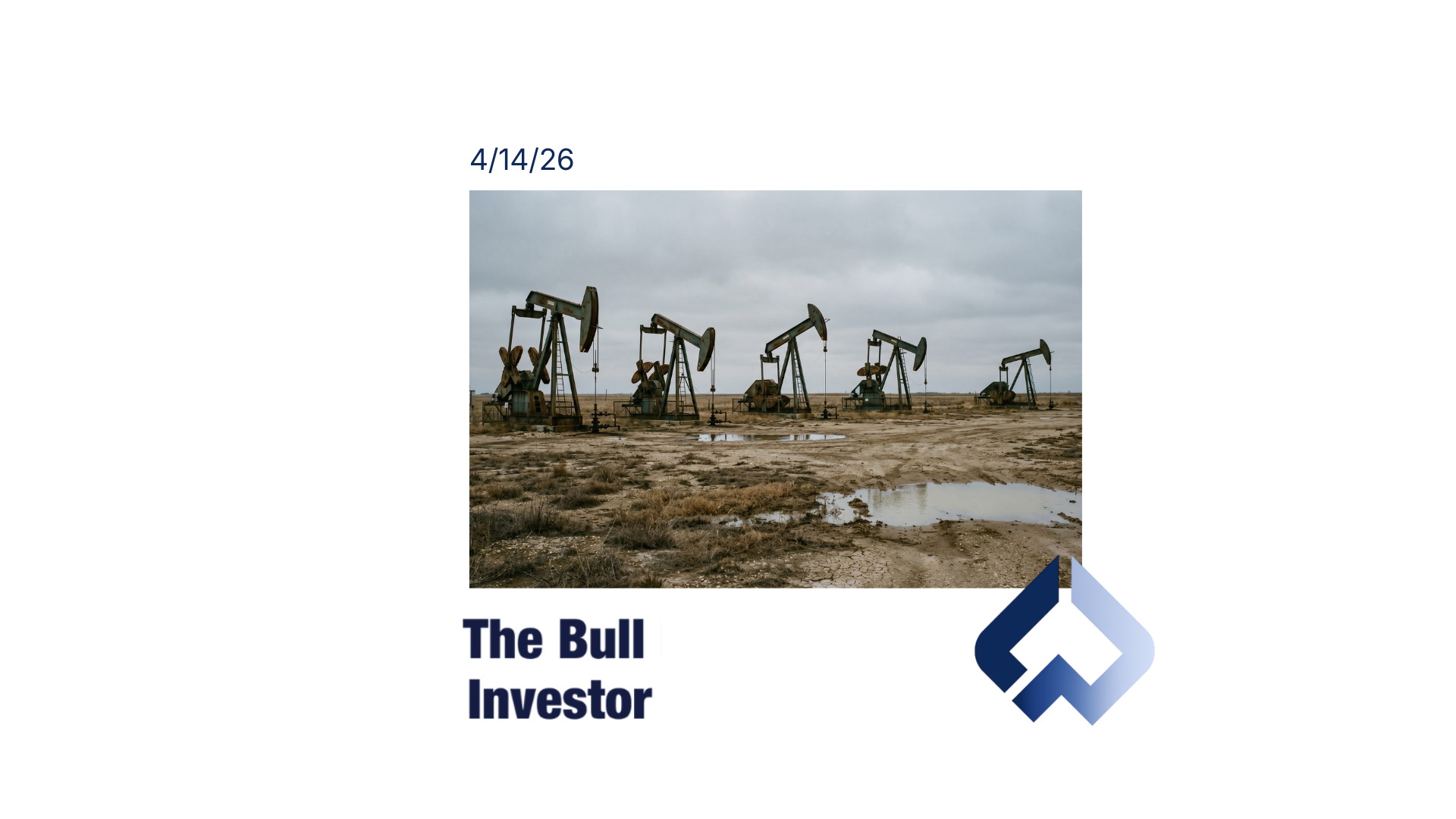
Earnings season begins amid the biggest energy disruption in modern history.
Good afternoon,
The IEA released its April oil report this morning, and the finding is significant: global oil demand will shrink this year for the first time since Covid. Meanwhile, stocks have quietly erased every loss from the Iran war, Goldman Sachs posted its second-best quarter in history, and three more major banks report before the bell today. For anyone building around long-term stability, the gap between what companies earn and what energy costs will determine how far this rally can go.
See also: April 24 = Musk's next "millionaire-maker?" (ad)

The Pulse

The S&P 500 closed Monday at 6,886.24, its highest level since before the conflict began. Oil is pulling back from $99 toward $96 on hopes for renewed Iran talks. The 10-year Treasury yield sits near 4.31%.
If you want to know which chipmaker could be the next NVIDIA, just ask Jeff Brown.
He knows more about AI chips than practically anyone on the planet — Thanks to his senior executive roles at Qualcomm, Juniper Networks, and NXP Semiconductors…
And Jeff just uncovered that one tiny chipmaker — 148 times smaller than NVIDIA — is set to provide Musk 5 billion chips in the next two years alone.
Click here for the full story or read more below.
Special report from our partner
Markets
- The S&P 500 jumped 1.02% on Monday, fully recovering its war-driven losses. The Nasdaq gained 1.23% and the Dow added 302 points.
- Oil surged early Monday after the U.S. naval blockade of Iranian ports took effect, with Brent hitting $99.36 and WTI closing at $99.08. Prices are retreating Tuesday on IEA demand warnings and renewed hopes for talks.
- The IEA now projects global oil demand will contract by 80,000 barrels per day in 2026, a swing of 730,000 b/d from last month's growth forecast. A projected 1.5 mb/d Q2 decline would be the sharpest since the pandemic.
Equities are pricing in a resolution. Oil is pricing in an open question. The IEA report suggests that the real economic damage is already underway in Asia, where fuel rationing and petrochemical shutdowns are spreading. The two-week ceasefire expires on April 22. What happens at the Strait of Hormuz between now and then will likely set the direction for both markets.
Earnings
- Goldman Sachs beat both earnings and revenue estimates on Monday, posting EPS of $17.55 against a $16.49 consensus and revenue of $17.23 billion, the firm's second-highest quarter on record. Two engines drove the result: record equities trading revenue of $5.33 billion, fueled by software-sector activity and Iran-related volatility, and a 48% surge in investment banking fees.
- That $12.8 trillion figure is based on a breakthrough AI product Musk is yet to launch. sponsored

This week's lineup:
- Tuesday: JPMorgan, Citigroup, Wells Fargo, BlackRock
- Wednesday: Morgan Stanley, Bank of America
- Thursday: Netflix, PepsiCo
Gold & Silver Moves
Gold rebounded to approximately $4,761 per ounce on Tuesday, recovering from a dip toward $4,700 on Monday when the U.S. blockade announcement initially rattled markets. (Trading Economics)
The metal remains down roughly 10% from its pre-war highs. That may sound counterintuitive during a geopolitical crisis, but the explanation is straightforward. Higher oil prices have pushed inflation expectations upward, which has made rate cuts less likely. That strengthens the dollar, and a stronger dollar tends to weigh on gold. In other words, gold is caught between its role as a safe haven and the rising real cost of holding it.
The bounce on Tuesday signals that investors are watching for a turning point. If oil prices continue to retreat on ceasefire hopes, the inflationary headwind eases, and gold could find room to run.
Silver was trading near $73.66 per ounce as of Sunday, up about 30 cents on the day. Over the past year, it has gained more than $41 per ounce.
Silver's strength reflects a dual role that gold does not share. It is both a monetary metal and an industrial one. Demand from solar panels, electronics, and the broader energy transition has tightened physical supply, giving silver a structural bid even when gold pulls back. That industrial floor is part of why silver has outperformed gold over the past twelve months.

The Gold / Silver ratio ratio dropped sharply overnight. According to JM Bullion data, it opened Monday around 63.3, drifted lower through the session, and then fell steeply in the early hours of Tuesday to approximately 61. That is a decline of more than two points in roughly 24 hours, a meaningful move for a ratio that usually shifts slowly.
At 61, the ratio sits well below its long-term average of roughly 80 and far from the 90-plus levels seen during periods of extreme risk aversion. For context, it spiked above 120 during the Covid panic in 2020 and compressed below 65 during the silver squeeze of early 2021. The current reading has now broken below that 2021 level, which tells us something about the strength of the forces driving silver.
A falling ratio means silver is outperforming gold on a relative basis. That can reflect several things at once: improving risk sentiment, rising industrial demand, and inflation expectations that favor hard assets broadly rather than gold alone. The overnight acceleration likely reflects the growing view that ceasefire talks may resume, which eases the inflationary pressure from oil. In that scenario, silver benefits more than gold because it picks up both the safe-haven bid and the industrial demand bid.
The takeaway: Both metals remain elevated on a year-over-year basis, but the ratio's sharp move below 61 suggests silver is accelerating its outperformance. For anyone holding metals as part of a long-term inflation hedge, the signal is clear: silver is being driven by real-world demand, not just sentiment.
The Deal Room
M&A / Investments
- American Industrial Partners will acquire Avanos Medical for $1.27 billion in an all-cash deal at $25 per share, a 72% premium to the prior close.
- CoreWeave expanded its AI cloud agreement with Meta to $21 billion through 2032, bringing total Meta commitments to $35 billion. The deal includes early deployments of Nvidia's Vera Rubin platform.
- PIMCO is in talks with Bank of America to provide roughly $14 billion in debt financing for an Oracle data center in Michigan that will power OpenAI applications.
- Right now, Wall Street is paying close attention to Musk's brand-new venture…Because top market analysts say it could be worth $12.8 trillion.It's a tiny company trading around $33…And most people have no idea it has any connection to Musk. ad
IPO / Listings
- Blackstone has filed for an IPO of its data center acquisition firm, reportedly targeting about $2 billion in proceeds.
If you missed Musk's previous "millionaire-makers," you do not want to miss this.
Click here to see all the details before April 24.
Sponsored content
Retirement Lens
The IEA's demand contraction forecast is a signal that higher energy costs are starting to bite. For retirees and near-retirees, this matters in two ways. First, elevated fuel and food prices erode purchasing power directly. The latest CPI reading of 3.3% underscores that pressure. Second, if central banks hold rates higher for longer to fight energy-driven inflation, bond portfolios may continue to see volatility.
On the other side, equity earnings remain resilient so far. Goldman's beat on Monday and the Q1 growth forecast of 13% suggest corporate profits are absorbing the shock. In an environment where the biggest risk may not be a sudden crash but a slow grind of inflation eating into real returns, some investors have been looking at a mix of equities, metals, and shorter-duration bonds, which are bonds that mature sooner and tend to be less sensitive to interest rate swings, as one way to navigate this kind of landscape.

Headline Hunt
- March CPI came in at 3.3%, the highest since May 2024, with the monthly index jumping 0.9%, the steepest rise since mid-2022, driven largely by energy costs.
- VP Vance said the ball is now in Iran's court after weekend talks in Islamabad failed to produce a breakthrough.
- S&P 500 Q1 earnings are expected to grow 13% YoY on 9.2% higher revenue, the sixth straight quarter of double-digit profit growth.
- The Fed is widely expected to hold rates at the April 28–29 meeting, with markets now pricing only one cut in 2026.
- Fed Chair Powell's term expires May 15. Kevin Warsh has been mentioned as a leading candidate to succeed him.
- Allogene Therapeutics surged nearly 30% on positive Phase 2 CAR-T data in lymphoma patients.
- Airlines declined broadly on Monday as weekend storms caused over 38,000 flight delays and 1,900 cancellations worldwide.
Recommended Reading
- What to Watch as Big Banks Report Q1 Earnings (MorningStar)
- Watch out for THIS move from Musk (Partner Content)