🔹 Trump Extends Iran Truce. Markets Exhale. Barely.
Stocks bounce on the ceasefire extension, but oil and inflation remain the unresolved risks.
Good afternoon,
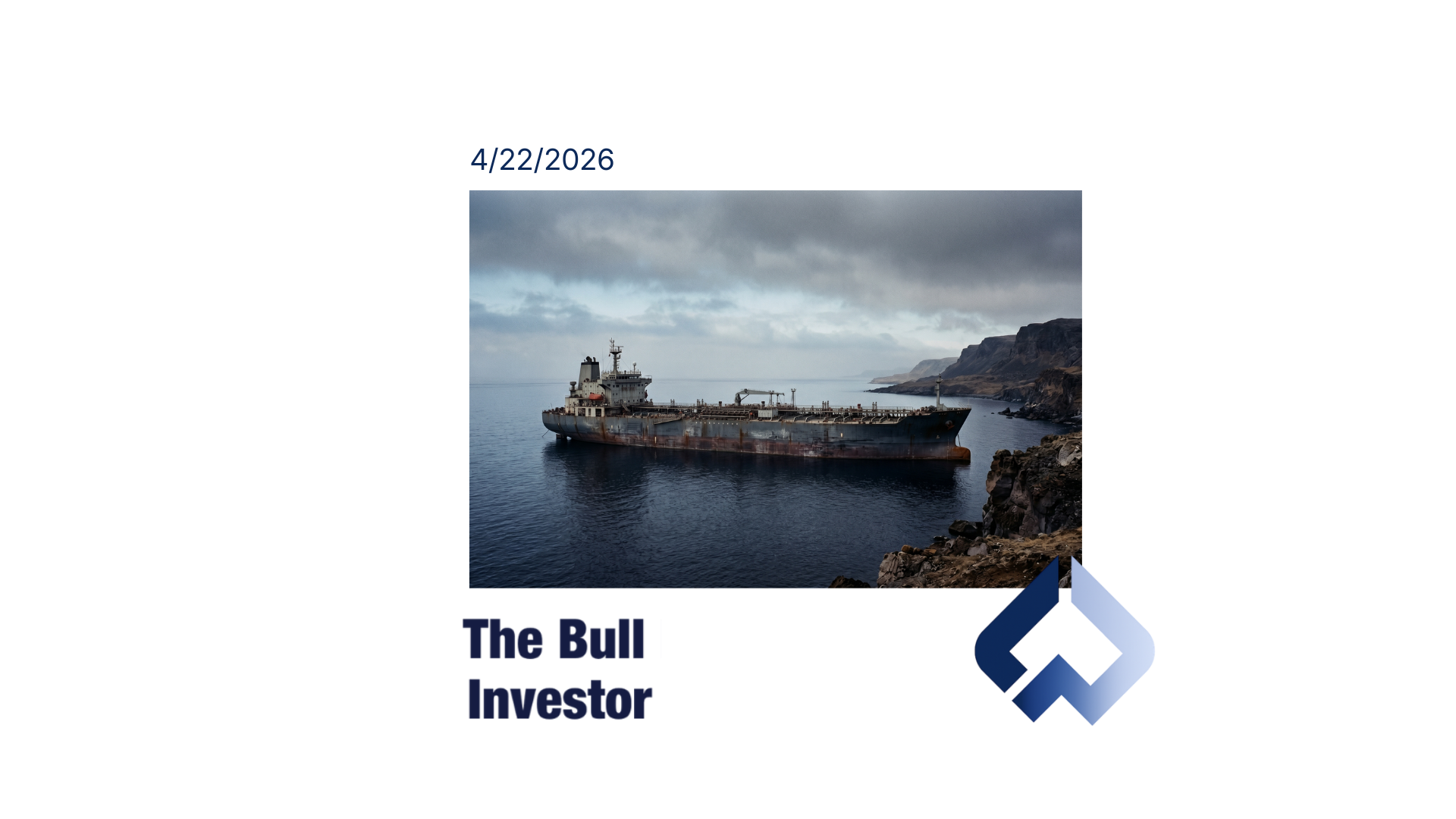
The ceasefire held. Or rather, it was extended, which is not the same thing. President Trump pushed the Iran truce past its Wednesday deadline, and futures climbed on the relief. But oil remains near $99 a barrel, the Strait of Hormuz is still effectively closed, and an Iranian gunboat fired on a container ship just hours after the extension was announced.
On Capitol Hill, Kevin Warsh sat for a contentious confirmation hearing to become the next Fed chair. And on Wall Street, UnitedHealth delivered a quarter strong enough to lift the entire health care sector. I will be honest: there is a lot to take in today. So let us walk through it calmly.

The Pulse

Markets
- Stocks fell Tuesday as peace deal uncertainty weighed on sentiment. The S&P 500 shed 0.63% to 7,064, the Nasdaq dropped 0.59%, and the Dow lost 293 points. Futures reversed higher overnight after the ceasefire extension.
- Oil stayed elevated. Brent crude settled above $98 a barrel after an Iranian gunboat fired on a container ship in the Strait of Hormuz Wednesday morning, hours after the truce was extended. US gas prices average about $4.05 a gallon nationally.
- US economic data came in hot. March retail sales jumped 1.7%, the largest monthly gain in a year, while the ADP employment change four-week average climbed to 54,800 from 39,000. Both readings pushed yields higher and reinforced the view that the economy remains resilient.
- Kevin Warsh testified before the Senate Banking Committee. Trump's Fed chair nominee called for a new inflation framework and pledged independence, but Sen. Thom Tillis vowed to block the confirmation vote until the DOJ investigation into current Chair Powell is dropped.
The market is caught between two forces. Earnings are strong and the economy is running hot, but the unresolved energy shock from the Iran war keeps inflation risk squarely on the table. Until the Strait of Hormuz reopens in a meaningful way, the ceiling on optimism stays low.
Earnings
- UnitedHealth (UNH) delivered the standout report. Adjusted EPS came in at $7.23, well above the $6.57 consensus. The medical benefit ratio dropped to 83.9%, beating the expected 85.5%. Full-year guidance was raised to more than $18.25 per share. Shares surged roughly 9%.
- Intuitive Surgical (ISRG) beat on both lines. Revenue rose 23% to $2.77 billion, and EPS hit $2.50 versus $2.14 expected. Procedure volume grew 17%. Full-year guidance was raised.
- GE Aerospace, RTX, Northrop Grumman, and 3M all reported Tuesday morning, with defense names benefiting from the wartime spending backdrop.
Earnings season is delivering. S&P 500 companies are tracking 12.6% year-over-year profit growth, the sixth consecutive quarter of double-digit gains.

This week's lineup:
- Today: Tesla, AT&T
- Thursday: Intel, Blackstone, American Airlines, American Express
- Friday: Procter & Gamble
Gold & Silver Moves
Gold traded near $4,759 per ounce early Wednesday, recovering modestly after falling 0.81% on Tuesday to $4,782. The metal remains under pressure from a firming dollar and elevated Treasury yields, both driven by the strong retail sales and employment data.
Gold is down more than 8% since the Iran war began. That seems counterintuitive for a safe haven, but this conflict created an unusual dynamic. The energy shock is pushing inflation higher, which raises expectations for tighter policy. Higher rates increase the cost of holding gold, and right now that cost is outweighing the geopolitical bid. Still, gold has posted four consecutive weekly gains, and major banks continue to project prices well above current levels through year-end.
Silver rebounded toward $79 early Wednesday after falling 3.95% on Tuesday to $76.55. The decline was sharper than gold's, reflecting silver's dual identity as both a monetary metal and an industrial commodity. Silver is down roughly 15% since the war started, nearly double gold's drawdown.

The Gold / Silver ratio sits near 61:1 today, well below the modern long-term average of roughly 70:1, and dramatically compressed from the 105:1 level of April 2025. Silver has repriced sharply. The easy relative-value trade is largely behind us.
The recent widening from 59 to 61 over the past week suggests gold is reasserting its lead slightly, driven by renewed safe-haven flows and silver's sensitivity to rate expectations. If the Fed holds or tightens, the ratio could drift higher. If the Iran conflict resolves and oil normalizes, silver's industrial demand story could push it back down.
The takeaway: Historically, gold and silver have served as hedges when inflation is sticky and the geopolitical picture is unclear. Both of those conditions remain firmly in place today. With gold near $4,759 and silver rebounding toward $79, the question many readers are asking is straightforward: how do I actually put this to work for my own savings?
The Deal Room
M&A / Investments
- Amazon will invest up to $25 billion in Anthropic, on top of $8 billion already committed, at a $350 billion pre-money valuation. Anthropic commits $100 billion to AWS over the next decade.
- Apple named John Ternus as its next CEO effective September 1. Tim Cook will become executive chairman. It is Apple's first leadership transition since 2011.
- Cerberus Capital Management led a $2.3 billion continuation vehicle for SubCom, the undersea cable maker.
IPO / Listings
- SpaceX has filed confidentially for a June IPO targeting a $1.75 trillion valuation. The offering could raise up to $75 billion, dwarfing the current record.
- The IPO Everyone Is Waiting For. Tech analyst Jeff Brown says the eventual IPO of SpaceX could become the biggest public offering in history. Click here to see partner
- Jersey Mike's, backed by Blackstone, filed confidentially for an IPO reportedly targeting a valuation above $12 billion.
Antitrust / Regulatory
- Live Nation was found liable for illegal monopoly in ticketing by a federal jury. Shares fell over 5%. A remedies trial will determine potential structural changes, including a possible breakup.
Retirement Lens
Today's data tells a familiar story for this cycle. The economy is resilient, earnings are growing, and equity markets are near record highs. But underneath, the risks that matter most to retirement portfolios remain unresolved. Oil is still elevated. Inflation is sticky. The Fed leadership is in transition. And the largest energy supply shock in history has not been unwound.
Here is the number worth sitting with: the 2.8% Social Security COLA was set when inflation looked like it was cooling. Now CPI is running at 3.3%. That gap is real, and it is felt most by people living on fixed income. Add the 9.7% jump in Medicare Part B premiums, and the net benefit increase gets even thinner. It is a quiet erosion, the kind that does not make headlines but shapes how a retirement actually feels.
None of this requires action. It requires attention. Historically, long-term portfolios have benefited from consistent allocation and diversification, especially in periods that feel uncertain. Strength in earnings is real. So is the inflation risk. Both can be true at the same time.
And in times like these, it is worth knowing exactly where your savings sit and how well they are protected.

Headline Hunt
- The UK and France are convening military planners from over 30 nations in London today to discuss reopening the Strait of Hormuz.
- The IMF cut its 2026 global growth forecast to 3.1%, down from 3.4%, citing the Middle East conflict.
- CrowdStrike was upgraded to Overweight by KeyBanc with a $525 target, despite concerns over Anthropic's Mythos cybersecurity model.
- The 2026 Social Security COLA of 2.8% is already losing ground to inflation, with March CPI at 3.3% year-over-year. The Senior Citizens League projects the 2027 COLA will also land near 2.8%.
- The 30-year fixed mortgage rate fell to 5.99% as of April 21, down from 6.37% a month ago, offering a window for refinancing as the spring buying season picks up.
- Medicare Part B premiums rose 9.7% in January to $202.90 per month, partially offsetting the Social Security COLA for most retirees.
- Wells Fargo upgraded CRH, citing sticky European demand and underappreciated M&A capacity.
- San Francisco Fed President Mary Daly said she favors a "wait and see" approach on rates given the Iran conflict.
- Netflix shares fell 9% in extended trading after a disappointing Q2 forecast and the departure of co-founder Reed Hastings from the board.
Allegiance Gold, LLC is not a broker-dealer and does not provide investment, tax, or legal advisory services. No statement in this communication should be construed as a recommendation to purchase or sell any security, or as investment, tax, or legal advice. Precious metals, like all investments, carry risk, are not suitable for all investors, and past performance does not guarantee future results. We do not guarantee any investment performance. Please consult your own investment, tax, or legal advisor prior to making any investment decision. Third-party information quoted or presented by us in this communication represents only the opinions of the third party and we do not endorse any third-party source of information. We are not affiliated with the U.S. Mint or any government agency. ©Allegiance Gold, LLC 2026.